from Consistency to Confidence
How Knightsville Elementary Transformed Writing Achievement with Writing with Design.
Building the Foundation
Knightsville’s leadership team recognized that their curriculum did not offer quality writing instruction. Like so many curricula, the one at KES simply assigned writing prompts without providing teachers clear guidance on how to teach the skills students need to respond effectively.
Teachers were searching for a structured, practical approach—one that moved beyond assigning writing to teaching writing. By introducing Writing with Design, the school established a unified language for instruction from PreK through 5th grade. Teachers learned how to break down complex writing skills into manageable steps, analyze model responses, and scaffold instruction so that students could clearly see—and practice—what quality writing looks like.
the Data behind the Growth
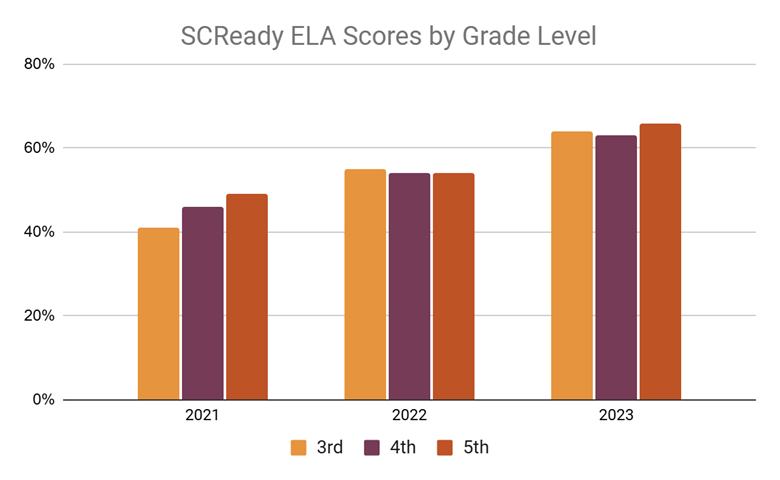
All Grades Rising
+17–25 points
ELA proficiency growth since 2021
• Every grade level showed consistent yearly gains
• Growth averaged 9–12 points per year
• By 2023, all grades reached the mid-60% proficiency range
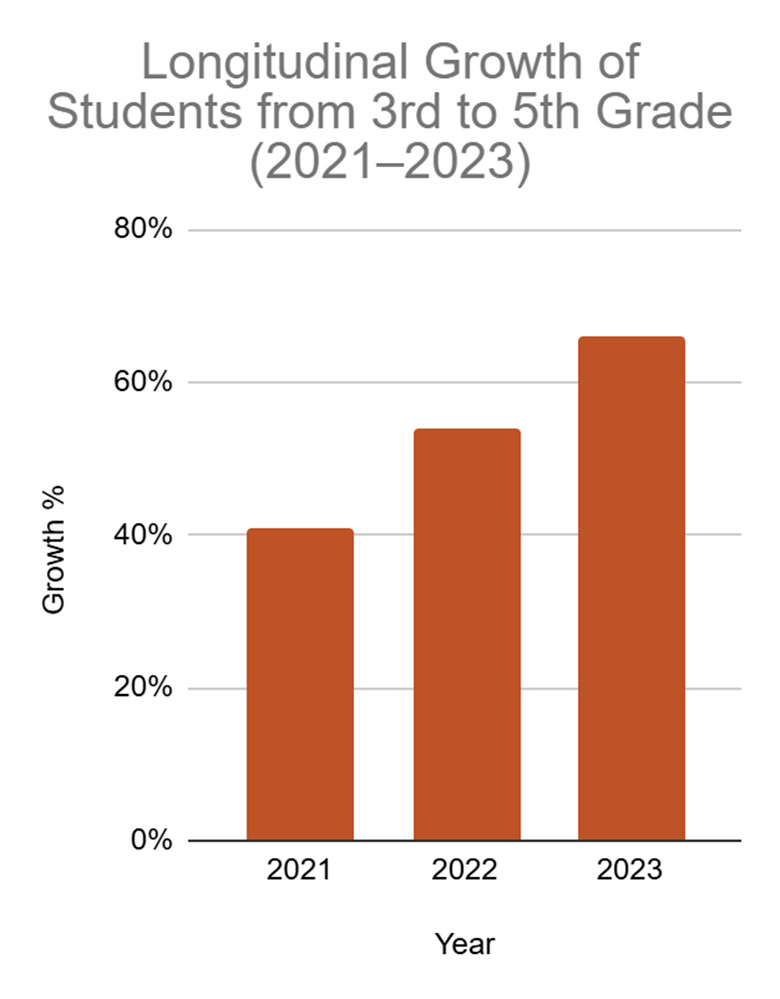
3 Years of Compounding Growth
+25 points
from 3rd → 5th grade
• Gains averaged 12–13 points per year
• Students transferred writing skills across subjects
• Early instruction continued to influence later success
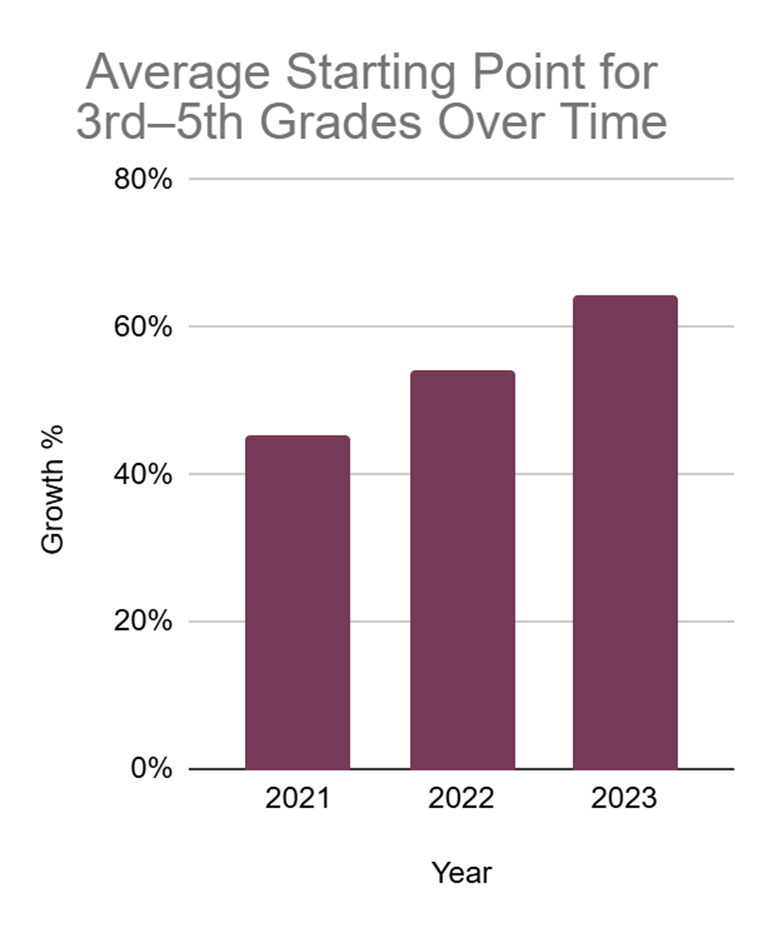
Each Cohort Starts Stronger
+20 point increase
in starting proficiency since 2021
• Stronger writing foundations in early grades
• Students arrive more prepared each year
• Professional learning strengthened instructional consistency
Writing with Design produces consistent, replicable improvement across classrooms and grade levels.
“We’ve seen the power of consistent professional development paired with purposeful time to plan writing across all content areas. Our teachers feel seen, heard, and genuinely cared for.”
Courtney Bruffey, Title I Coordinator
4 months of writing instruction in Writing with Design
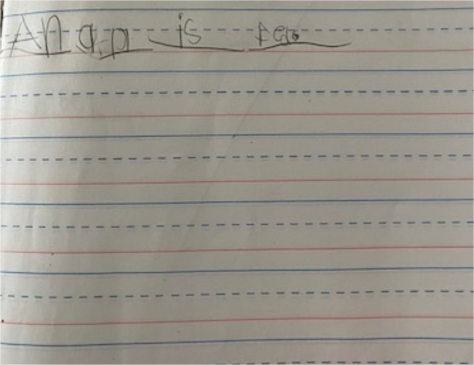
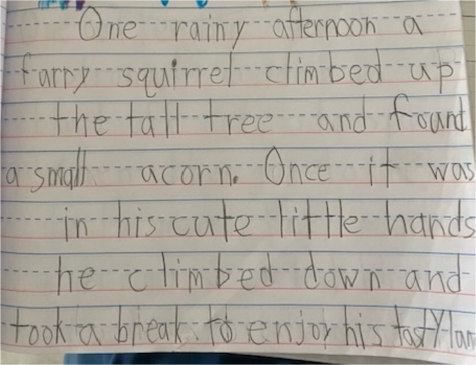
What happens when writing becomes intentional?
Knightsville’s results show what’s possible when writing instruction is explicit, aligned, and consistently implemented across grade levels.